
Legend of the Outlaw Mage
Legend of the Outlaw Mage is an isometric single player ARPG game developed by a 19-member team. The game contains three levels and a final boss fight.
In the game, the protagonist Charlotte can obtain a variety of magic spells to combat various encounters and enemies. I was mainly responsible for world building, combat design, and game balance. Welcome to the Magical Wild West!
-
Role: Level Designer
-
Engine: Unreal Engine4
-
Genre: ARPG
-
Team Size: 17 Developers
-
Development Time: 6 Months
-
Released in 2022 FEB 18th, Steam
-
Map design and world building
-
Encounter design
-
AI design and balance adjustment
-
Boss design
-
Traps and mini puzzle design
-
Localization (Chinese)

Steam Link
Postmortem
What Went Well
-
In our group, direct communication between the disciplines gave us a high communication efficiency, meaning we avoided communication errors between people. This improved our overall efficiency while developing the game.
-
Prioritization and having a voice in that prioritization really helped our project to progress smoothly. At the beginning of each milestone, each team member wrote down the tasks he considered important from high priority to low priority. Through this strong task planning, we were able to complete all the important tasks at each milestone.
-
When implementing new or complicated features, several people formed strike teams to discuss risks and coordinate opinions.
What Went wrong
-
I often forget to update my task status on Jira. Going forward in projects, I'll need to make sure tasks are updated at the beginning and at the end of the day. It would be helpful to have a dedicated time to update tasks in future.
What I Learned
-
Communicate is important and outlining clear requirements with Software Developers or Artists as early as possible at each milestone. Doing so means they can start important work as soon as possible.
-
Confirming the naming convention and folder structure with team members at the beginning of the project can avoid repeated revisions in the later stage and help keep the project more organized.
Outlaw Mage is divided into three main levels, a tutorial level, and a final boss level. I was mainly responsible for the design and construction of the third level and the final boss level.
I built levels that gave players more opportunities to explore. The guidelines of our level construction is that the starting level is linear and simple, and the later levels have more branching paths, which means there are more areas for players to explore in the third level, and players can collect more powerful spells to add to their arsenal! First, I sketched my ideas on paper and had my lead level designer and game designer give their approval. Once approved, I could move into engine.


Then I tried to use Unreal4's default BSP to make my paper prototype's into Block Mesh to simulate the initial game experience. Since there was no map generation tool yet, I roughly divided the chambers in the map into connected squares. Early in development, there was two ways to clear the map. One was the player clears the surrounding area of monsters and obtains all the keys to unlock the central boss room. The other was that the boss room is the farthest from the player's spawn point, and the player needs to explore while moving forward. Then I implementws the two enemy AI types, the melee enemy and the shooting enemy, into the level for testing.
.png)
.png)
In the test level, I tried to simulate the size of the each chamber to match the play style and player movement. The goal was to allow the player and enemy AI to flow freely through the level, with the player's line of sight slightly unobstructed. After repeated testing and tweaking, I finally made some adjustments to the level building rules:
-
Adjusted the average size of the level to 1.25 times the current size, allowing players to have a comfortable experience when using the dash skill.
-
Changed all the pillars in the level from full height to half-human-height stones, so that players can have a better visual experience.


The Map Generation Tool is a tool for building level walls developed by the programming team which as very handy for developing irregular level boundaries. I arranged the spline in the level according to the paper prototype and then generated the wall to get a more organic wall shape.
In addition, due to performance constraints, we loaded the player's rooms separately and used portals to connect the rooms to each other.


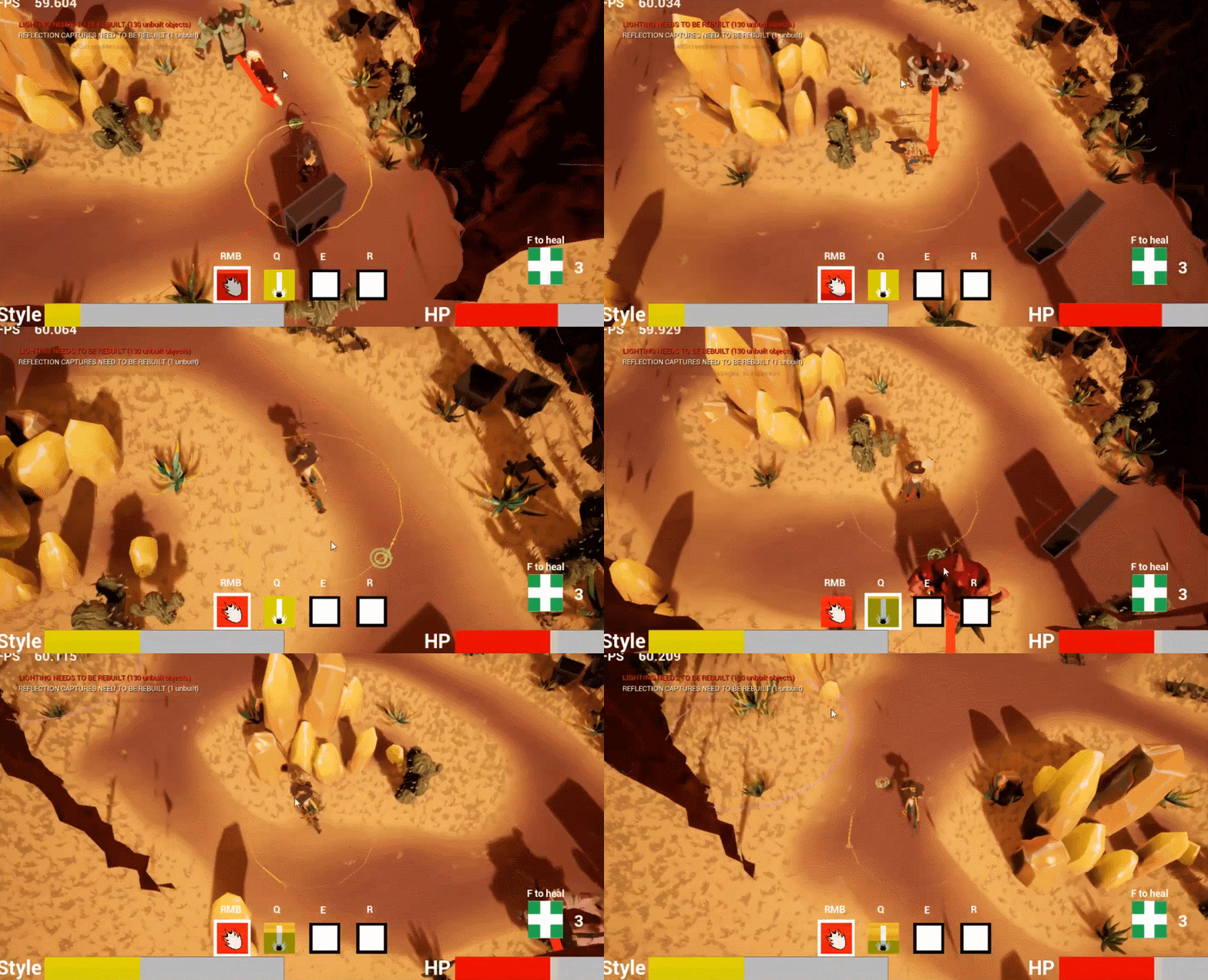
By the time we reached o the Vertical Slice milestone, we achieved the effect shown in the image below. We had the full level layout and initial gameplay in engine and playable. Covers, portals, AI spawners and basic decorations were also implemented.

Vertical Slice Testing
-
I replaced the block in the middle of the room with the assets provided by the art team and made sure that the players and monsters would not get stuck on them.
-
Arranged trap props that players can use them to kill enemies.
-
Connected different rooms with portals and used red lights to indicate that the next room is the boss room.
-
Arranged campfire checkpoints and story items, as well as environmental elements and decoration, such as stones, plants, etc.


The traps in Outlaw Mage include spike traps, fireball turrets, and ice knives turrets.
In the Trap Zoo level, I tested various trap combinations to find interesting ways to play. For example, the combination of spikes and bumpers will test the player's reflexes while moving through a space.
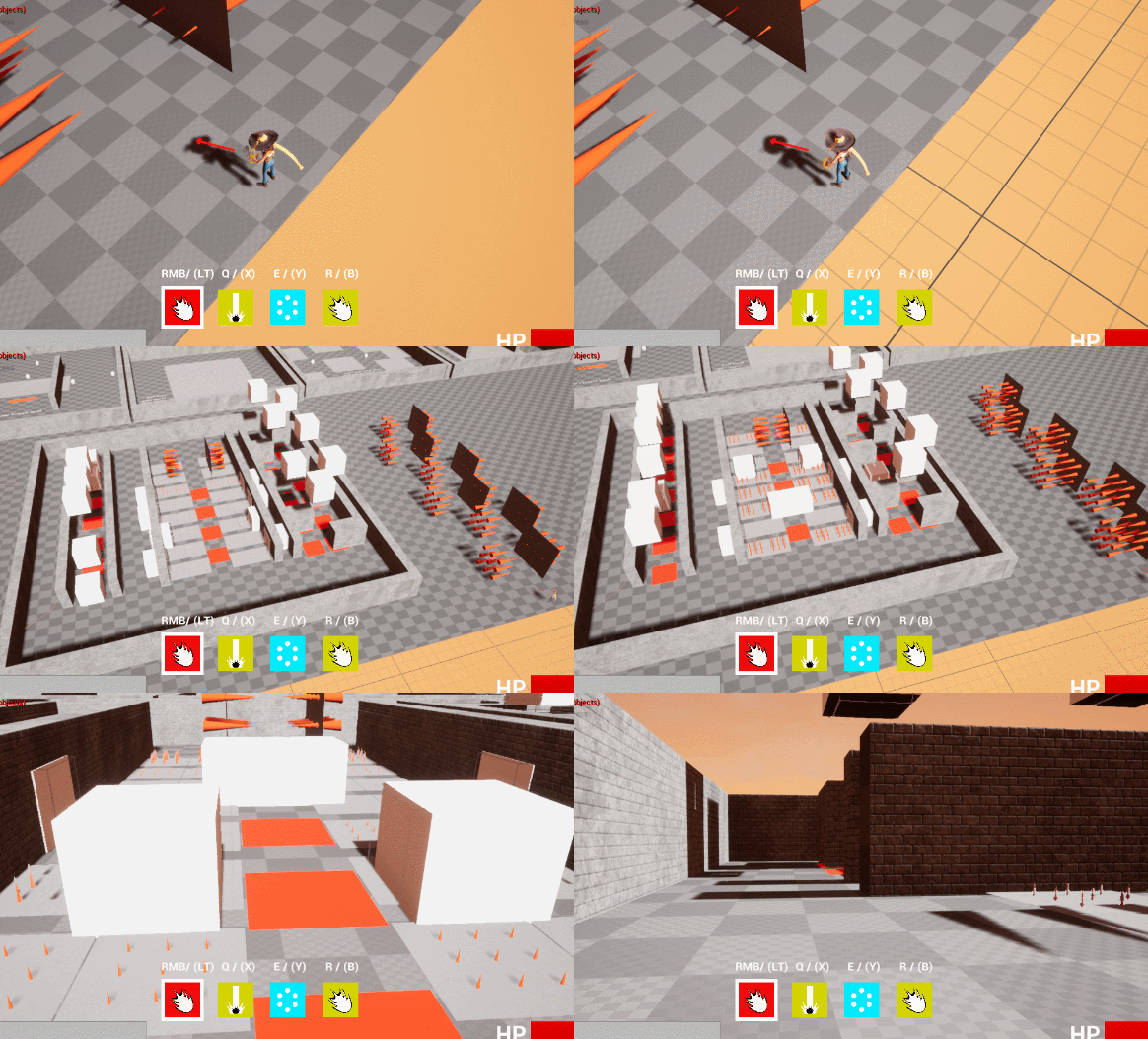
I designed three trap chambers from easy to hard, which are found in the second and third levels respectively.
Since this game is an action focused, testing the player's ability to move and avoid obstacles also fell within our gameplay pillars. Players can obtain powerful spells after successfully traversing the trap room, giving them an incentive to attempt these challenging spaces.


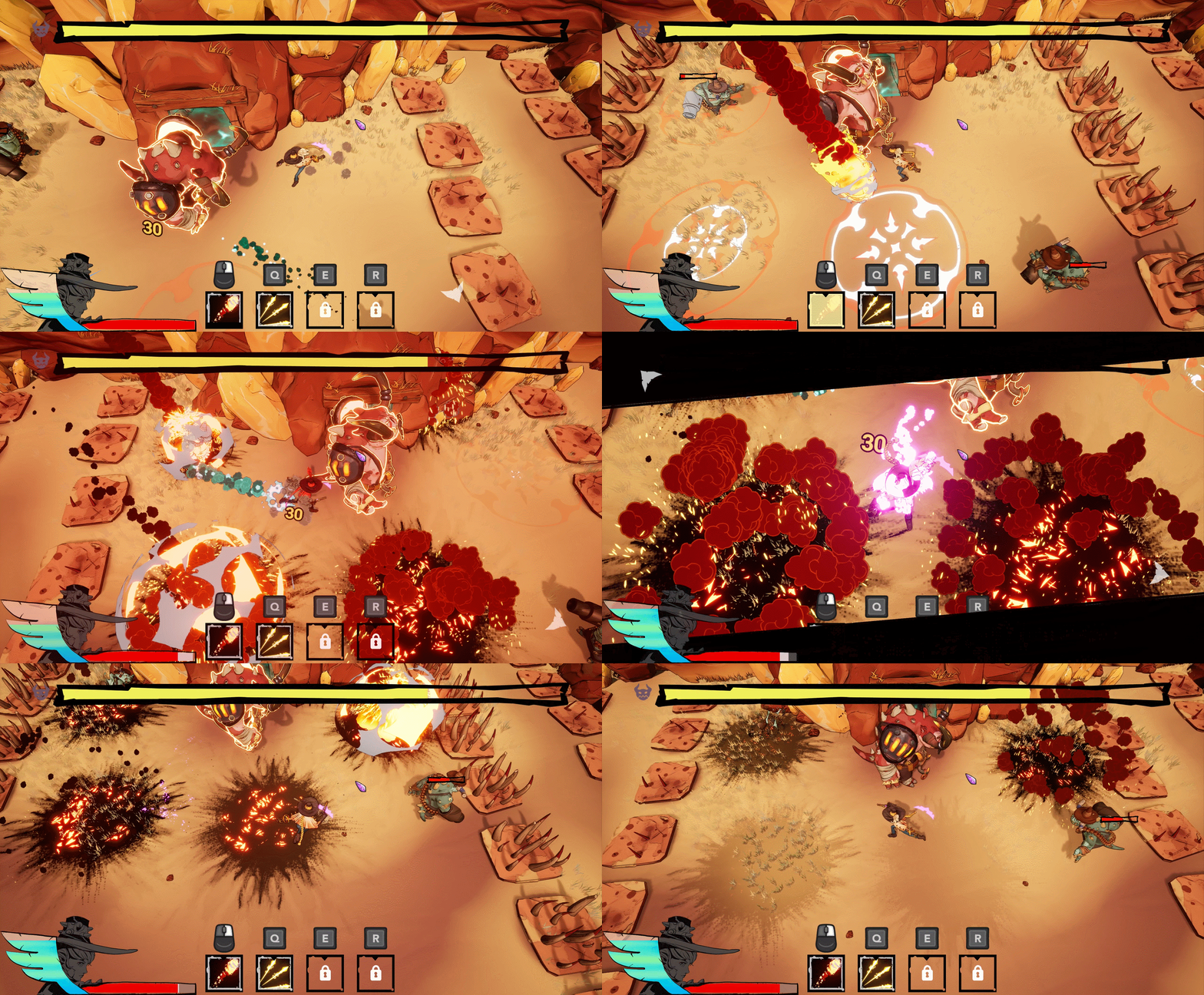
There are three Minibosses in the game: the Brute miniboss, the Gunner miniboss, and the Shielder miniboss. Their behavior logic is similar for all three. They first use 1-2 skills or attacks, and then enter the Taunt state. At this time, the player can stun them for 3 seconds by attacking them. When attacking, they are in the domineering state (golden outline), and their behavior cannot be interrupted. The aim of this was to give players a clear opportunity to attack.
Behavior Logic

Brute Miniboss
The brute miniboss is a mixture of melee and range. The first skill is a fast dash towards the player. The second skill is an area of effect called Meteor Rain. After roaring, six meteorites will fall around him. The two skills can be combined with each other to cause heavy damage, which tests the player's ability to dodge quickly.


Meteor Strike

Gunner Miniboss
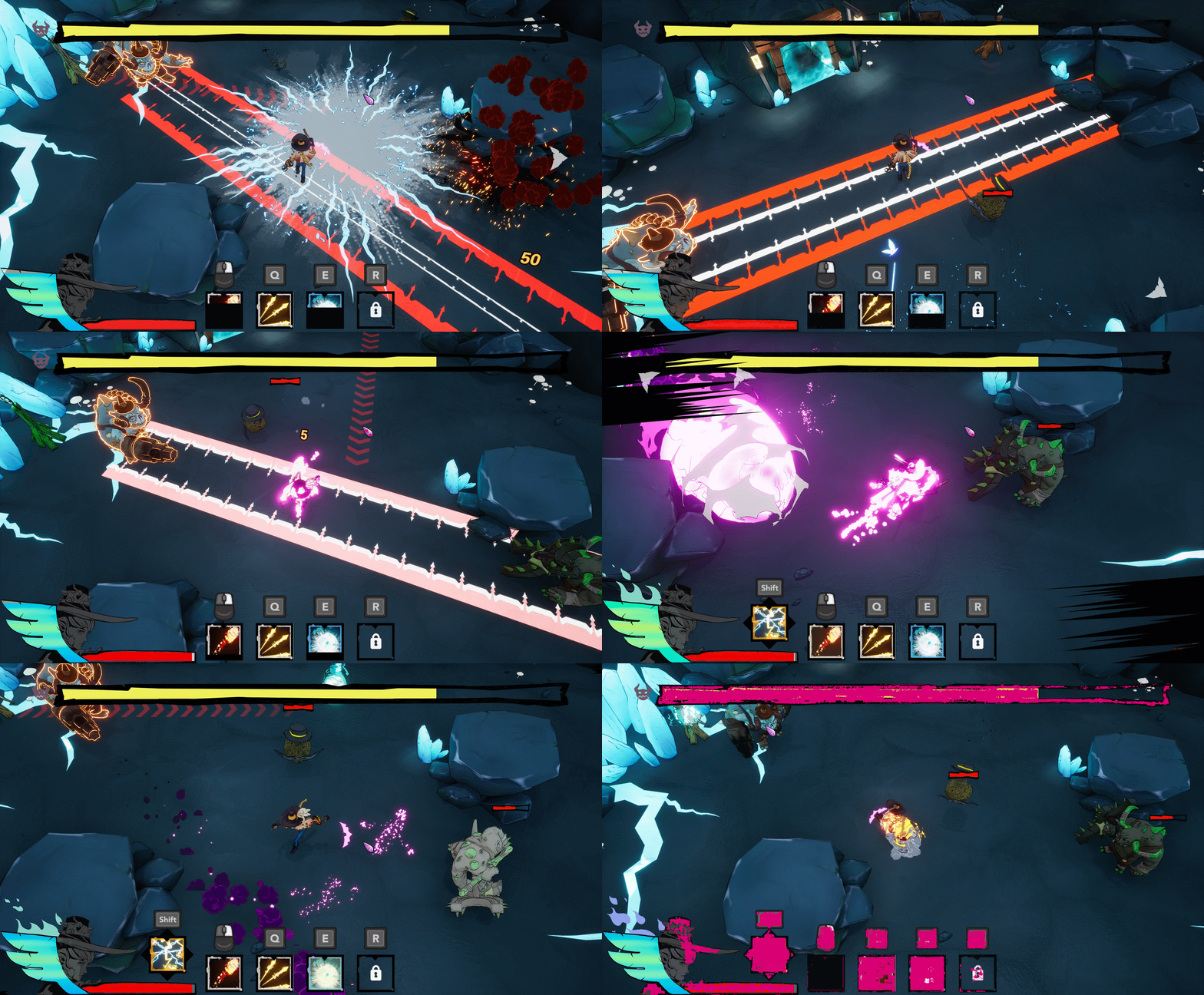
The Gunner Miniboss is a long range boss. Skill 1 is to track and launch several projectiles based on the player's current location. Skill 2 is to launch a huge fireball and explode after being charged. The boss's AI is designed to always be adjusted to attack at a distance from the player. This design tests the player's ability to dodge flexibly and the use of finding cover quickly.

Big Fireball
Gatling Gun
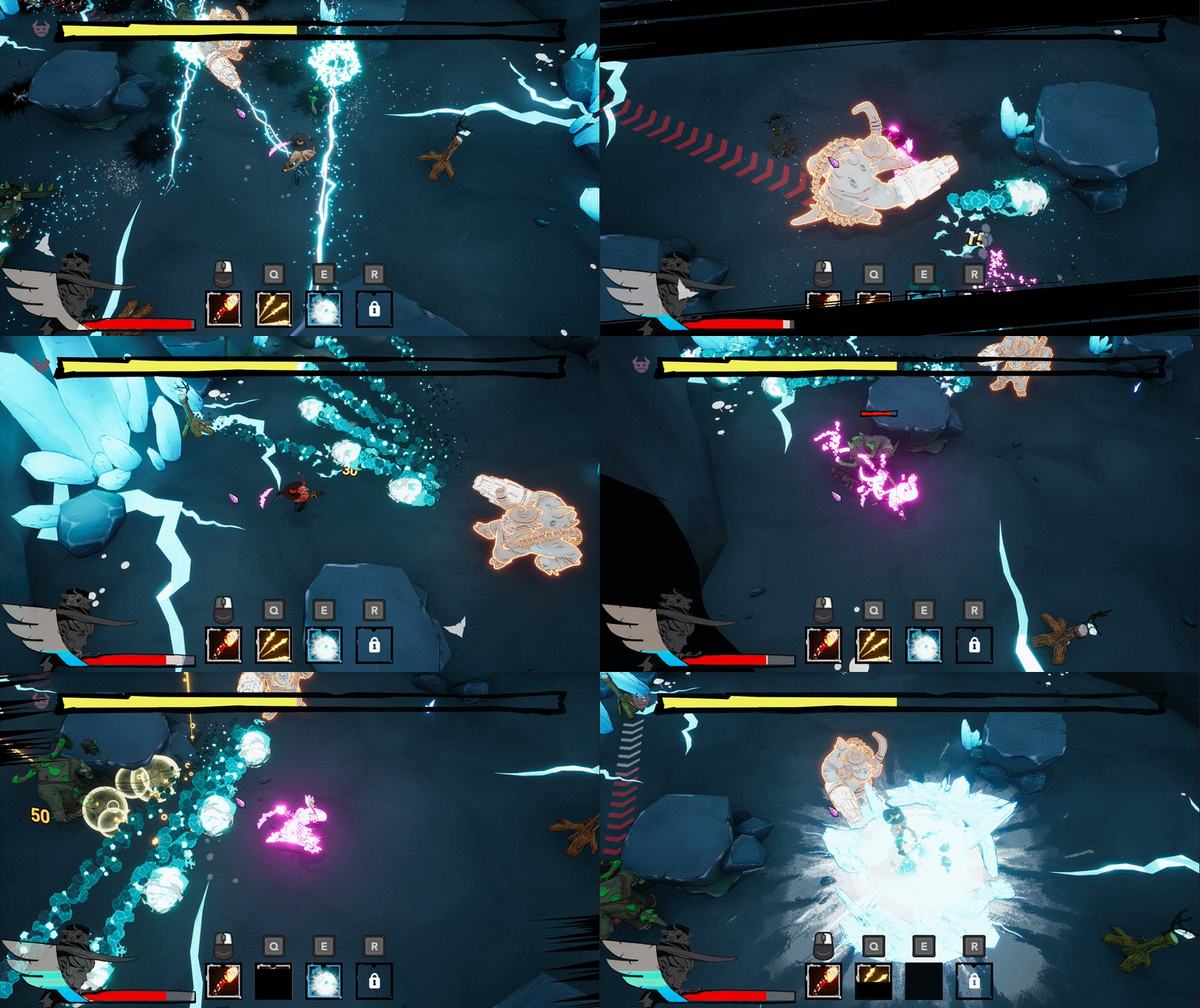

Shielder Miniboss
The Shielder Miniboss is a defensive boss. Skill 1 is a short-distance dash that carries a knock-up. Skill 2 is to launch five beams of shields to impact the player. The design of the two skills is to have one have a vertical range and the other have a horizontal range. In addition, the damage of the player attacking the enemy from the front is only one-fifth of the normal damage, so the player is encouraged to look for the weakness on his back to attack.

Big Fireball
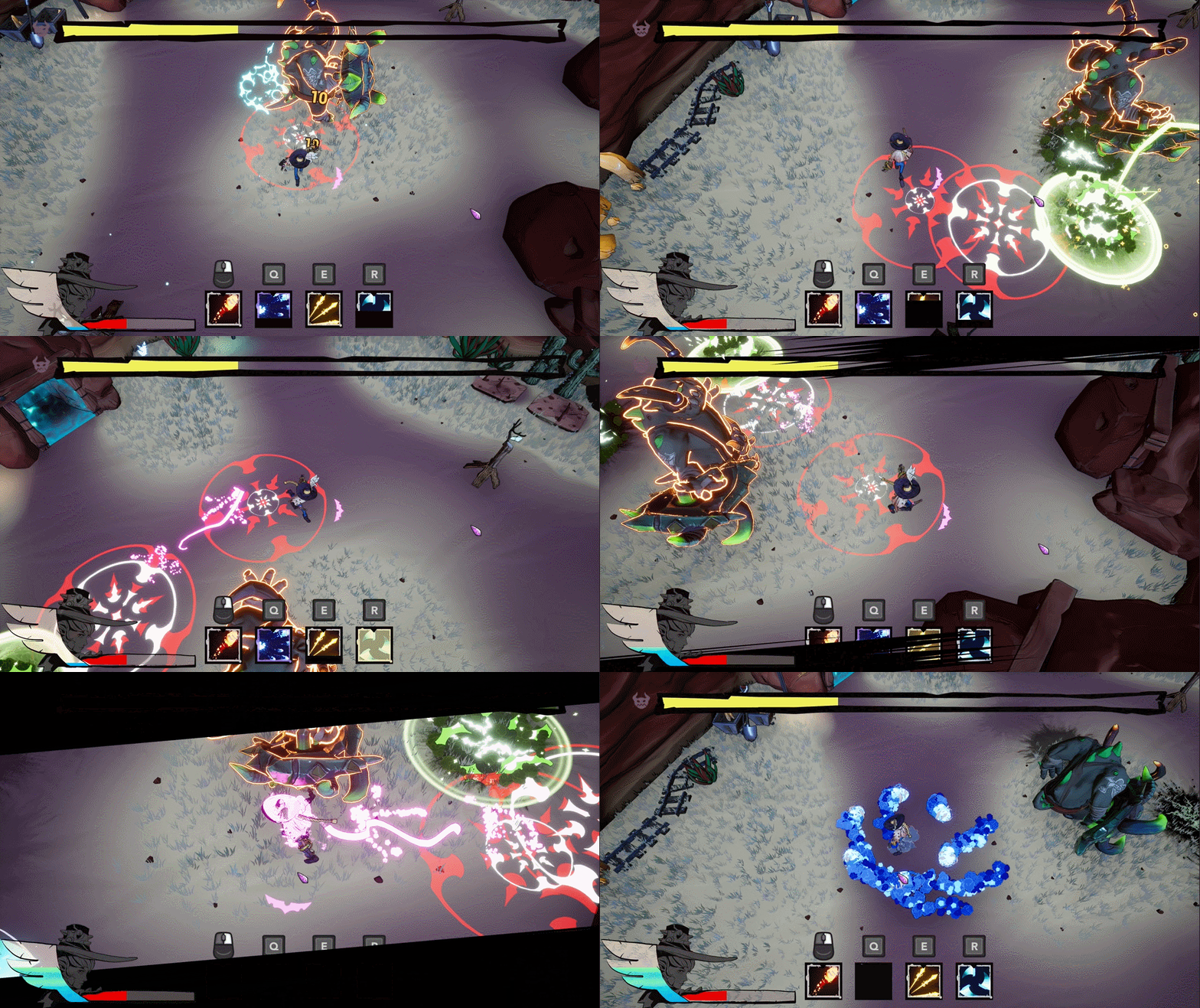
Gatling Gun
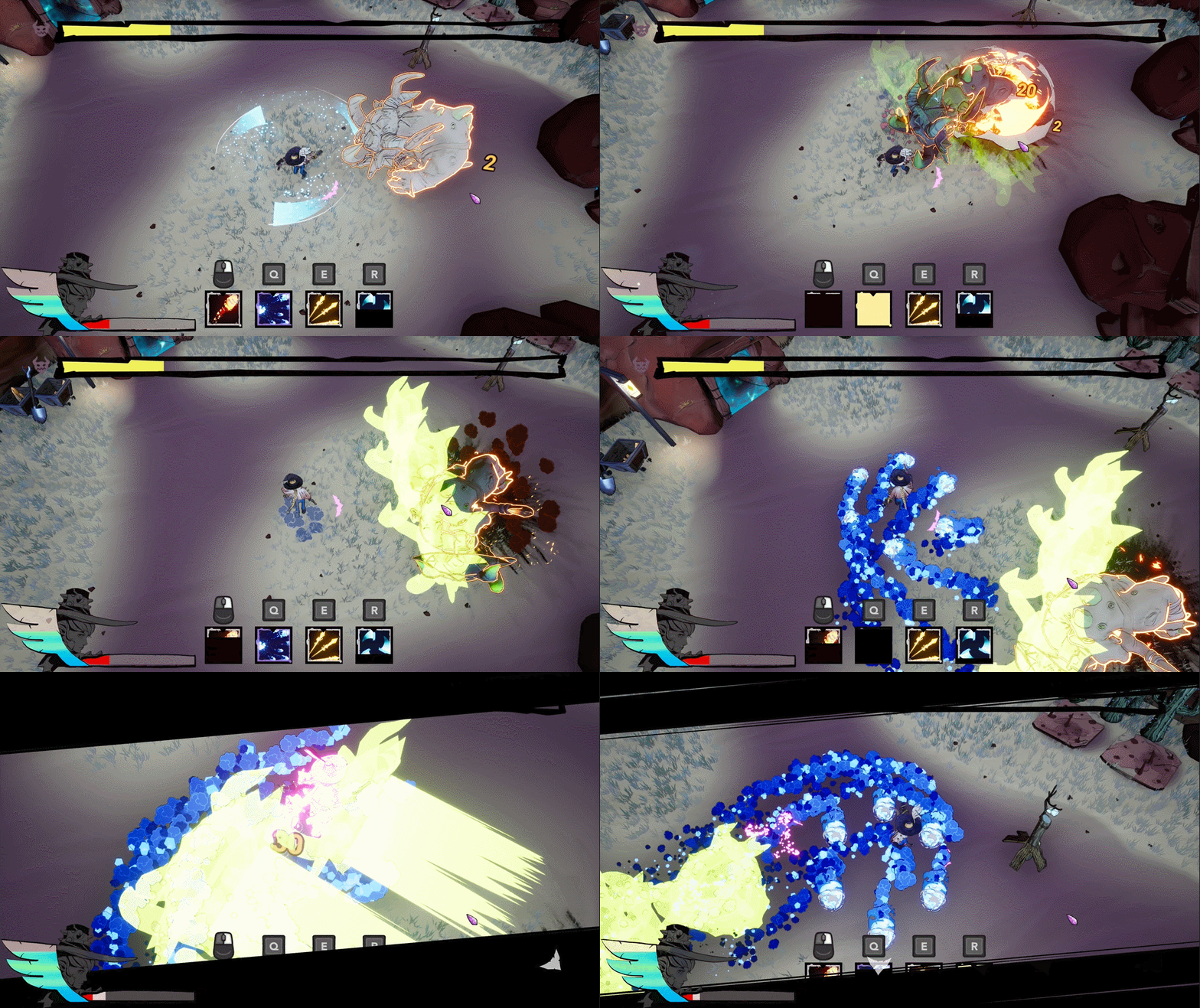

Shadow Charlotte
Shadow Charlotte, the final boss of the entire game, is also the dark version of Charlotte (the protagonist of the game). She has more powerful magic and a more flexible dash than Charlotte. Players need to rely on wisdom and experience to defeat this powerful opponent and break the nightmare she causes Charlotte.
Shadow Charlotte’s skills include projectiles, lasers, and range explosion. Combining the characteristics of previous minibosses, it tests the players' various dodge skills. Her mobility and dodge abilities are also stronger. Same as Charlotte's dash, she has three consecutive dashes, and she is invincible during the dash.
Behavior Logic
Shadow Charlotte's behavior logic is divided into two stages with 50% HP as the trigger point. Phase 1 has four basic skills. After each skill is released, the boss will use the invincible three dashes to move to a distance suitable for the next skill to be released. After the four skills are released, the boss will enter the taunt state. At this time, when the player attacks the boss, she will be stunned for 3 seconds.
When the boss drops below 50%, it enters stage 2. The four basic skills evolve into four enhanced skills, which have a larger coverage area and more lethality.
This behavioral logic is similar to that of the minibosses, allowing players to gradually find patterns based on experience. Secondly, the stage design can also make players feel like they are overcoming a significant challenge.


